
Engaging Early Replicators for Climate Resilience
The RethinkAction project is dedicated to helping local actors make informed decisions in the face of climate change. A key part of this mission is engaging Early Replicators — actors who can bring the RethinkAction Integrated Assessment Platform into their professional and community contexts, driving practical change in climate resilience and land-use planning.
Reaching Out Globally
The project launched a broad outreach effort to connect with participants from diverse sectors and regions. The aim was to involve a variety of perspectives, including public authorities, community organizations, academic institutions, and researchers. Early Replicators were invited to explore the platform’s capabilities, apply tools for climate adaptation, and share insights from their regions. This global approach brought together participants from Africa, Europe, the Americas, and Asia, highlighting the universal relevance of the RethinkAction Platform. By engaging a wide range of actors, the project ensured that the tools and strategies developed could be adapted to multiple contexts, reflecting different climate challenges and policy environments.
Webinar Series: From Introduction to Local application
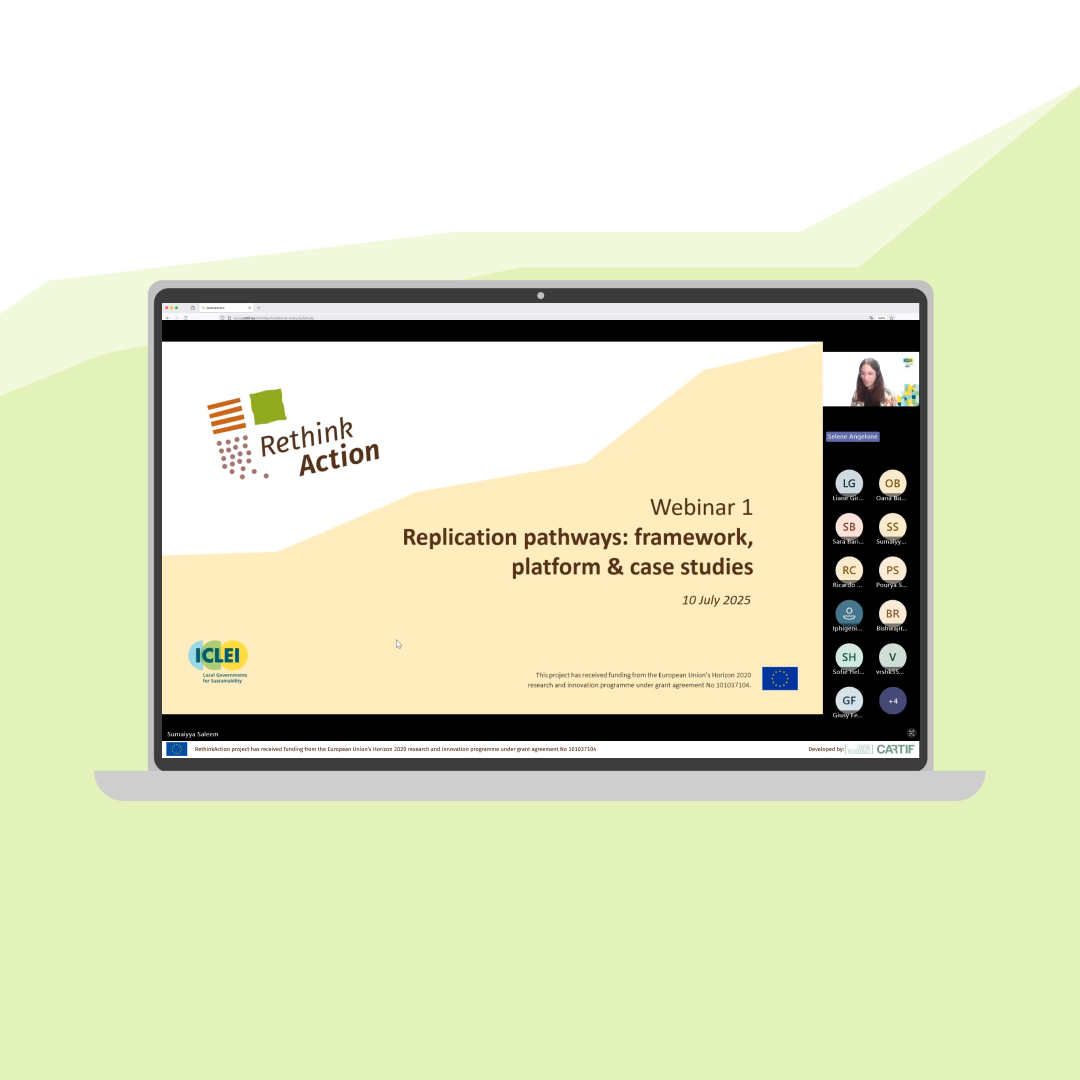
To support Early Replicators – as well as other interested parties – , a three-part webinar series was organized:
Replication Pathways – Understanding the Platform
The first webinar introduced participants to the RethinkAction replication approach and the platform itself, including the LAMS (Land use-based Adaptation and Mitigation Solutions) catalogue. Case studies from diverse regions demonstrated how climate data informs land-use and adaptation and mitigation strategies, setting the stage for participants to envision applications in their own contexts.
Using the Platform – Learning from Similar Contexts
The second webinar offered hands-on guidance on navigating the platform. Participants explored matched case studies, analysed policy scenarios, and learned to identify practical adaptation measures. Interactive exercises allowed them to see how the platform could support decision-making in their own regions.
Making it Relevant – Applying tools locally
The final session focused on translating insights into local action, showing how to apply LAMS measures and scenario planning tools to real-world challenges. Participants reflected on their own priorities, identifying ways the platform could inform climate resilience strategies at both community and municipal levels.
The webinars were implemented collaboratively. ICLEI facilitated and moderated the sessions, while technical partners such as CARTIF, FC.ID, GMV, NOA, CMCC, and UVa contributed expertise on platform navigation, climate risk mapping, LAMS tools, and scenario planning.
Key insights and takeaways
The engagement series revealed that Early Replicators are confronting a diverse and escalating range of climate risks. In many cases, these include prolonged heatwaves and droughts threatening water security, and floods endangering both infrastructure and livelihoods. Biodiversity loss was also a recurring concern, as it undermines ecosystem services critical to local economies.
Discussions highlighted the cross-sectoral nature of these challenges. Water management emerged as a central concern, both for human consumption and ecosystem health. Health and education systems were flagged as vulnerable due to their exposure to extreme events and their role in safeguarding community well-being. Agriculture and energy sectors were also noted as particularly sensitive, with climate impacts disrupting food production, supply chains, and reliable power generation.
Participants valued the opportunity to engage with real-world case studies that showcased practical solutions, as well as hands-on demonstrations of platform tools designed to support replication. The structured guidance on replication pathways was seen as a catalyst for moving from inspiration to implementation. A recurring theme was the need for sustained capacity building—not only training and resources, but also peer-to-peer learning networks that keep momentum beyond the initial engagement. Collaboration across borders and sectors was repeatedly cited as essential for addressing shared risks and scaling effective climate resilience solutions.
Looking Ahead
Participants and wider stakeholders will have the opportunity to revisit the discussions by watching the recordings of the webinars, ensuring the knowledge shared remains accessible and actionable. Looking forward, the upcoming RethinkAction MOOC will provide an in-depth exploration of how the platform was developed, as well as practical guidance on how to use and leverage its full range of features to design and implement impactful climate resilience strategies.

