
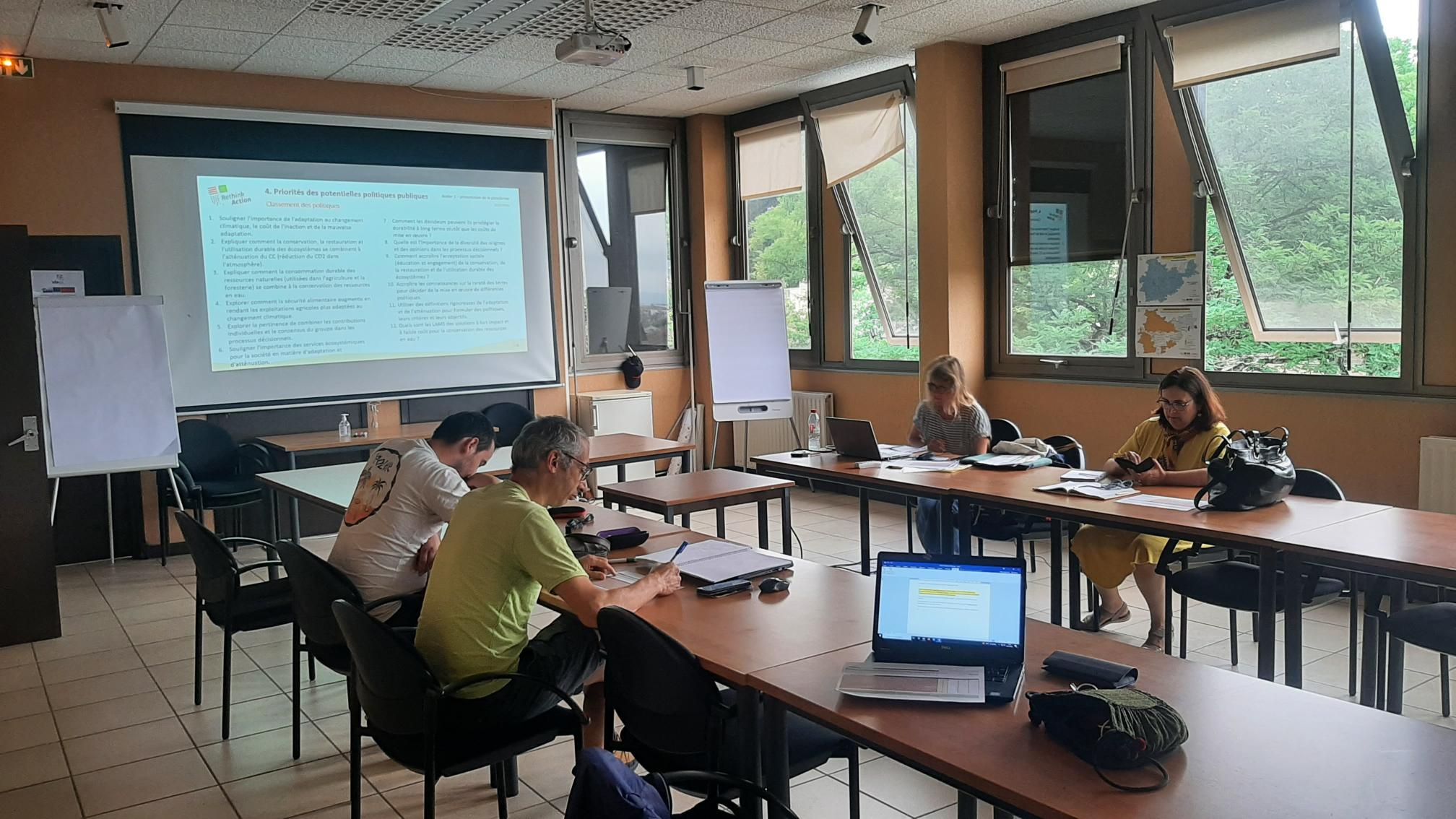
Between 2021 and 2025, the RethinkAction project has fostered a dynamic series of regional workshops in Tarn-et-Garonne, bringing together local stakeholders from agriculture, water management, administration, and research to collectively address climate adaptation and mitigation challenges. These workshops have emphasized the importance of Land-use based Adaptation and Mitigation Solutions (LAMS) as actionable levers to reduce climate risks and promote sustainable land management.
Building a Shared Vision through Dialogue
One of the key outcomes of the workshops has been the rich dialogue between diverse actors—farmers, water agencies, chambers of agriculture, local authorities, and scientific experts. This collaborative space has allowed the identification of both challenges and opportunities tied to the region’s agroecosystems, water resources, and socio-economic realities.
The importance of communication and social dialogue repeatedly emerged as a critical lever. For example, better public awareness around water management and the link between water use and food production was seen as essential to support necessary adaptations.
Key LAMS Identified and Discussed
The workshops explored several concrete Land-use based Adaptation and Mitigation Solutions relevant to Tarn-et-Garonne’s context:
- Water-Related Solutions: Reconsidering irrigation systems such as drip irrigation, which was initially designed as a complementary supply but is now often under-dimensioned. Prioritizing LAMS related to water management is critical, since agriculture cannot function without water. Participants also proposed improving regulation to allow more flexibility (e.g., reconsidering bans on afternoon watering).
- Intermediate and Associated Crops: The use of intermediate crops (grown between main crops during fallow periods) and associated crops (grown simultaneously) was highlighted for their roles in maintaining soil structure, biomass production, and water management. These practices contribute to carbon sequestration and are pillars of conservation agriculture.
- Reduction of Imported Products: A nuanced approach was suggested to reduce reliance on imported products while supporting local farmers and preserving pastures, potentially through subsidies compensating for economic losses.
- Agroforestry and AgriPV (Agricultural Photovoltaics): Agroforestry was noted for its synergy with agri-tourism, while agriPV raised questions about economic viability and long-term benefits in orchard production. The need to balance multiple uses of land was clear.
- Waste Valorization: Improving green waste management, including enhancing orchard pruning waste processing, was identified as a practical step towards sustainability.
Barriers and Enablers
Barriers include administrative complexity, heavy regulation, lack of economic incentives, and public misperceptions (especially concerning water use and bioenergy). Enablers involve developing advisory expertise, offering tax credits or subsidies, enhancing communication strategies, and fostering collaborative governance.
Evolution of Perspectives Across Workshops
Over the years, discussions evolved from focusing primarily on identifying barriers to proposing integrated solutions and experimenting with pilot projects. The recognition of LAMS’ multidimensional impacts—environmental, social, and economic—has deepened, fostering greater openness to innovative practices.
Towards a Resilient Tarn-et-Garonne
The RethinkAction project has laid the groundwork for a resilient agricultural landscape in Tarn-et-Garonne by encouraging knowledge sharing, co-creation of solutions, and multi-actor commitment. Moving forward, the challenge will be to scale successful LAMS, ensure policy alignment, and sustain social dialogue to enable adaptation and mitigation pathways that are locally appropriate and broadly supported.

